

What You’ll Get
When a run fails, Bolt automatically creates a Rootly incident containing:- Incident title with schedule name and workspace
- Incident details including:
- Direct link to Paradime run logs
- Run ID and execution details
- Start and end timestamps
- Commands executed
- Branch information
- Severity level based on your configuration
- Dedicated Slack channel for incident collaboration
Key Benefits for Data Teams
- Automated incident workflows - Trigger runbooks and automate response procedures for data pipeline failures
- Slack-centric collaboration - Manage incidents directly in dedicated Slack channels
- Rich analytics and reporting - Track incident trends and identify recurring pipeline issues
- Streamlined postmortems - Automatically generate timeline and action items for continuous improvement
Setup Guide
Set up Rootly incident creation for failed runs. Follow the steps below, and watch our interactive tutorial. Step 1: Gather Your Rootly Information- Generate API Key:
- Follow Rootly documentation to generate API Key
- Copy and save your API key securely
- Find Your Severity ID:
- Visit your Rootly severity configuration
- Identify the severity level you want to use for data pipeline incidents
- From the Bolt home screen, go to Templates
- Click Incidents and select “Create Rootly Incident”
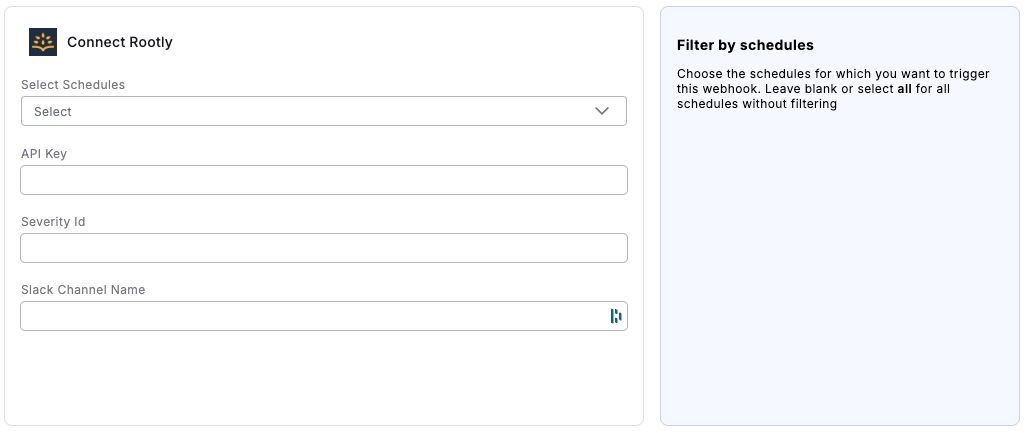
- Fill in the following fields:
- Select Schedules: Choose the schedules for which you want to trigger this webhook. Leave blank or select all for all schedules without filtering
- API Key: Enter the API key you generated in Rootly
- Severity Id: Enter the Severity ID from your Rootly configuration
- Slack Channel Name: Enter the Slack channel name where this incident should be managed (e.g.,
#data-incidents)
- Click “Connect”
- Run a Bolt schedule manually that will fail (the webhook only triggers on failed runs)
- After the run fails:
- Check your Rootly dashboard for the new incident
- Verify a Slack channel was created or the incident was posted to your specified channel
- Confirm the incident contains all run failure details