What You’ll Get
When a run fails, Bolt automatically creates a PagerDuty incident containing:- Incident title with schedule name and workspace
- Incident details including:
- Direct link to Paradime run logs
- Run ID and execution details
- Start and end timestamps
- Commands executed
- Branch information
- Urgency level based on your configuration
Key Benefits for Data Teams
- Leverage existing on-call rotations - Route data pipeline failures to the right team automatically
- Unified incident response - Manage data incidents alongside infrastructure incidents
- Mobile alerting - Get notified of critical pipeline failures via SMS, phone, or mobile push
- Escalation policies - Ensure critical data issues never go unaddressed
Setup Guide
Set up PagerDuty incident creation for failed runs. Follow the steps below, and watch our interactive tutorial. Step 1: Gather Your PagerDuty Information- Generate API Key:
- Follow the instructions in Pager Duty Documentation https://support.pagerduty.com/main/docs/api-access-keys
- Create a new API key
- Copy and save your API key securely
- Identify From Email:
- Use the email address of a valid PagerDuty user in your account
- This email must be associated with the account making API requests
- Typically, this should be a service account or bot user email
- From the Bolt home screen, go to Templates
- Click Ticketing and select “Create PagerDuty Incident”
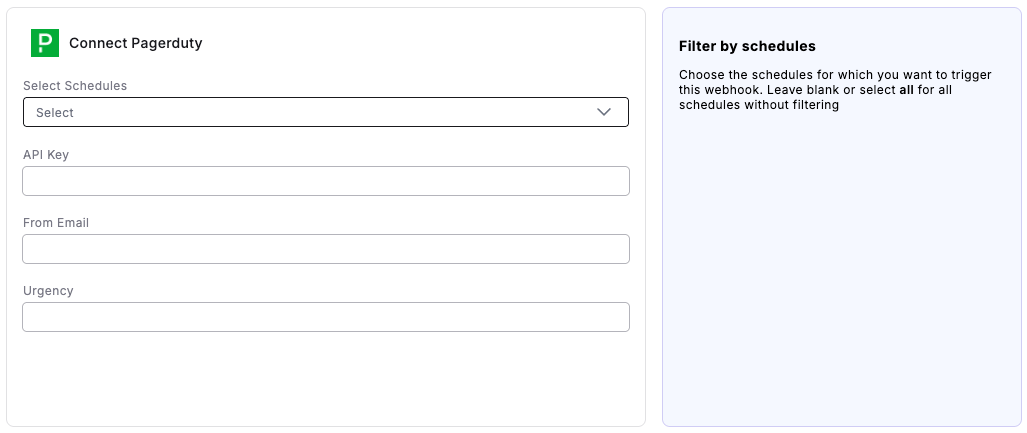
- Fill in the following fields:
- Select Schedules: Choose the schedules for which you want to trigger this webhook. Leave blank or select all for all schedules without filtering
- API Key: Enter the API key you generated in PagerDuty
- From Email: Enter the email address of a valid user associated with the account making the request
- Urgency: Select the urgency level:
high- For critical pipeline failures requiring immediate attentionlow- For non-critical failures that can be addressed during business hours
- Click “Connect”
- Run a Bolt schedule manually that will fail (the webhook only triggers on failed runs)
- After the run fails:
- Check your PagerDuty dashboard for the new incident
- Verify the appropriate on-call person was notified
- Confirm the incident contains all run failure details