

What You’ll Get
When a run succeeds, Bolt automatically triggers your Hightouch sync:- Webhook sent to Hightouch API endpoint
- Sync executes with your configured mappings
- Updated data flows to your operational tools (Salesforce, HubSpot, etc.)
Key Benefits for Data Teams
- Eliminate manual sync triggers - No more logging into Hightouch after each dbt™ run
- Accelerate data activation - Fresh operational data available in minutes, not hours
- Prevent stale data in business tools - Ensure sales and marketing always use today’s data
- Scale reverse ETL operations - Automate the data flow that powers customer-facing applications
Setup Guide
Set up Hightouch sync triggering for successful runs. Follow the steps below, and watch our interactive tutorial. Step 1: Gather Your Hightouch Information- Get Your Sync Slug:
- Go to your Hightouch Sync and find your Sync Slug in the overview section
- Copy Sync Slug
- Generate Your API Key:
- Follow Hightouch documentation to create API Key
- Copy your API key and store it in a safe location (the key will only be displayed once)
- From the Bolt home screen, go to Templates
- Click Reverse ETL and select the “Trigger Hightouch Sync” template
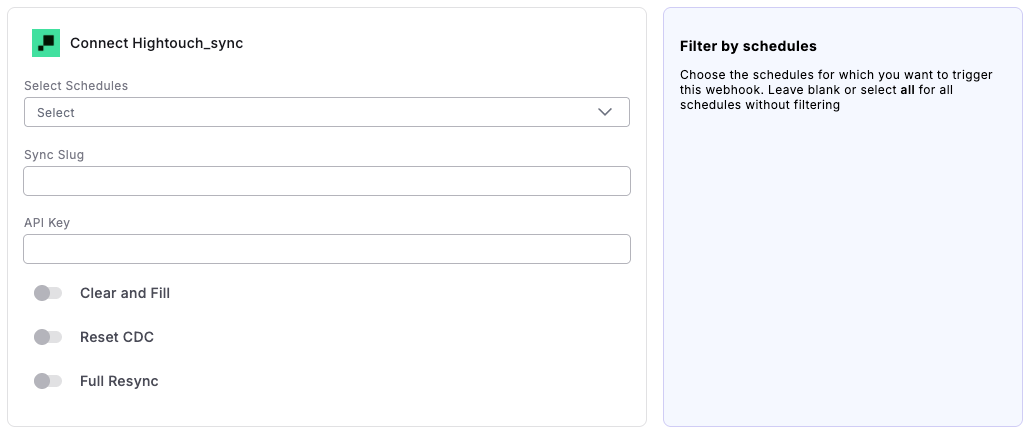
- Fill in the following fields:
- Select Schedules: Choose the schedules for which you want to trigger this webhook. Leave blank or select all for all schedules without filtering
- Sync Slug: Enter the Sync Slug you copied from Hightouch
- API Key: Enter the API key you generated in Hightouch
- Click “Connect”
- Run a Bolt schedule manually (the webhook triggers only on successful runs)
- After the run succeeds:
- From the Bolt homescreen, go to Webhooks
- Select your Hightouch Sync Webhook
- Check the Endpoints tab to verify the webhook triggered
- Verify in Hightouch that your sync has started