# Create Rootly Incident

Learn how to automatically create Rootly incidents when dbt™ runs fail in Bolt. This integration helps data teams track and respond to pipeline failures efficiently by connecting Bolt's pipeline monitoring with Rootly's incident management platform.

Create Rootly incident when the following Bolt schedules fail.

***

#### What You'll Get

When a run fails, Bolt automatically creates a Rootly incident containing:

* Incident title with schedule name and workspace
* Incident details including:
  * Direct link to Paradime run logs
  * Run ID and execution details
  * Start and end timestamps
  * Commands executed
  * Branch information
* Severity level based on your configuration
* Dedicated Slack channel for incident collaboration

***

{% hint style="success" %}
**Key Benefits for Data Teams**

* **Automated incident workflows** - Trigger runbooks and automate response procedures for data pipeline failures
* **Slack-centric collaboration** - Manage incidents directly in dedicated Slack channels
* **Rich analytics and reporting** - Track incident trends and identify recurring pipeline issues
* **Streamlined postmortems** - Automatically generate timeline and action items for continuous improvement
  {% endhint %}

{% hint style="warning" %}
**Prerequisites for Rootly Integration**

* Existing [Bolt schedule](https://app.paradime.io/bolt)
* Rootly account with API access
* Rootly API Key
* Configured severity levels in Rootly
* Slack integration configured in Rootly
  {% endhint %}

***

#### Setup Guide

Set up Rootly incident creation for failed runs. Follow the steps below, and watch our interactive tutorial.

**Step 1: Gather Your Rootly Information**

1. **Generate API Key**:
   * Follow [Rootly documentation](https://docs.rootly.com/api-reference/overview#how-to-generate-an-api-key) to generate API Key
   * Copy and save your API key securely
2. **Find Your Severity ID**:
   * Visit your [Rootly severity configuration](https://docs.rootly.com/configuration/severities)
   * Identify the severity level you want to use for data pipeline incidents

**Step 2: Configure the Webhook**

1. From the [Bolt](https://app.paradime.io/bolt) home screen, go to [Templates](https://app.paradime.io/bolt/templates)
2. Click **Incidents** and select "Create Rootly Incident"
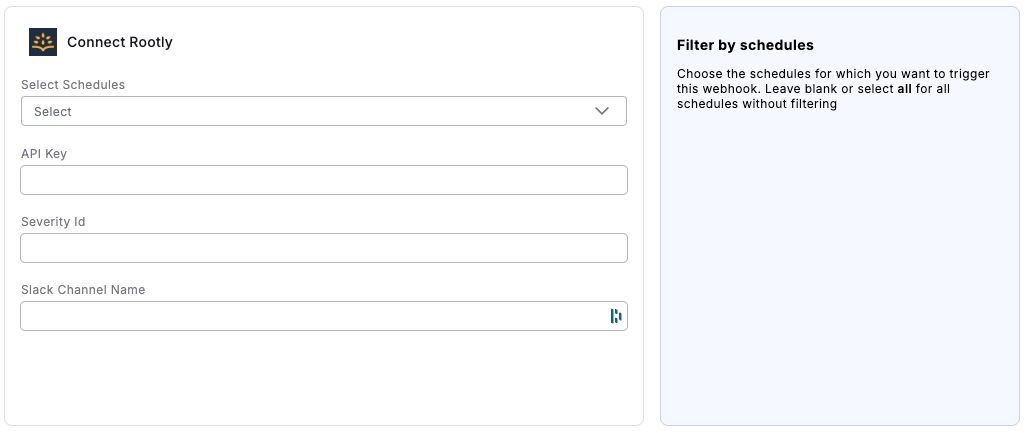
3. Fill in the following fields:
   * **Select Schedules**: Choose the schedules for which you want to trigger this webhook. Leave blank or select all for all schedules without filtering
   * **API Key**: Enter the API key you generated in Rootly
   * **Severity Id**: Enter the Severity ID from your Rootly configuration
   * **Slack Channel Name**: Enter the Slack channel name where this incident should be managed (e.g., `#data-incidents`)
4. Click "Connect"

<figure><img src="https://2337193041-files.gitbook.io/~/files/v0/b/gitbook-x-prod.appspot.com/o/spaces%2FHET0AD04uHMgdeLAjptq%2Fuploads%2Fog9pWZ5QYsoWpxAIT5cx%2Fimage.png?alt=media&#x26;token=6ddef553-5763-4a02-be14-783a57719f17" alt=""><figcaption></figcaption></figure>

**Step 3: Test the Integration**

1. Run a Bolt schedule manually that will fail (the webhook only triggers on failed runs)
2. After the run fails:
   * Check your Rootly dashboard for the new incident
   * Verify a Slack channel was created or the incident was posted to your specified channel
   * Confirm the incident contains all run failure details


---

# Agent Instructions: Querying This Documentation

If you need additional information that is not directly available in this page, you can query the documentation dynamically by asking a question.

Perform an HTTP GET request on the current page URL with the `ask` query parameter:

```
GET https://docs.paradime.io/app-help/documentation/bolt/creating-schedules/templates/incident-templates/create-rootly-incident.md?ask=<question>
```

The question should be specific, self-contained, and written in natural language.
The response will contain a direct answer to the question and relevant excerpts and sources from the documentation.

Use this mechanism when the answer is not explicitly present in the current page, you need clarification or additional context, or you want to retrieve related documentation sections.