

PrerequisitesBefore connecting incident.io to Paradime, make sure you have:
- An existing Bolt schedule
- incident.io account with API access
- incident.io API Key
- Configured severity levels in incident.io
Setup Guide
Set up incident.io incident creation for failed runs by following the steps below.Step 1: Gather Your incident.io Information
1. Generate API Key- Navigate to https://app.incident.io/settings/api-keys
- Click Create API Key
- Give it a descriptive name (e.g., “Paradime Integration”)
- Copy and save your API key securely
Step 2: Connect incident.io to Paradime
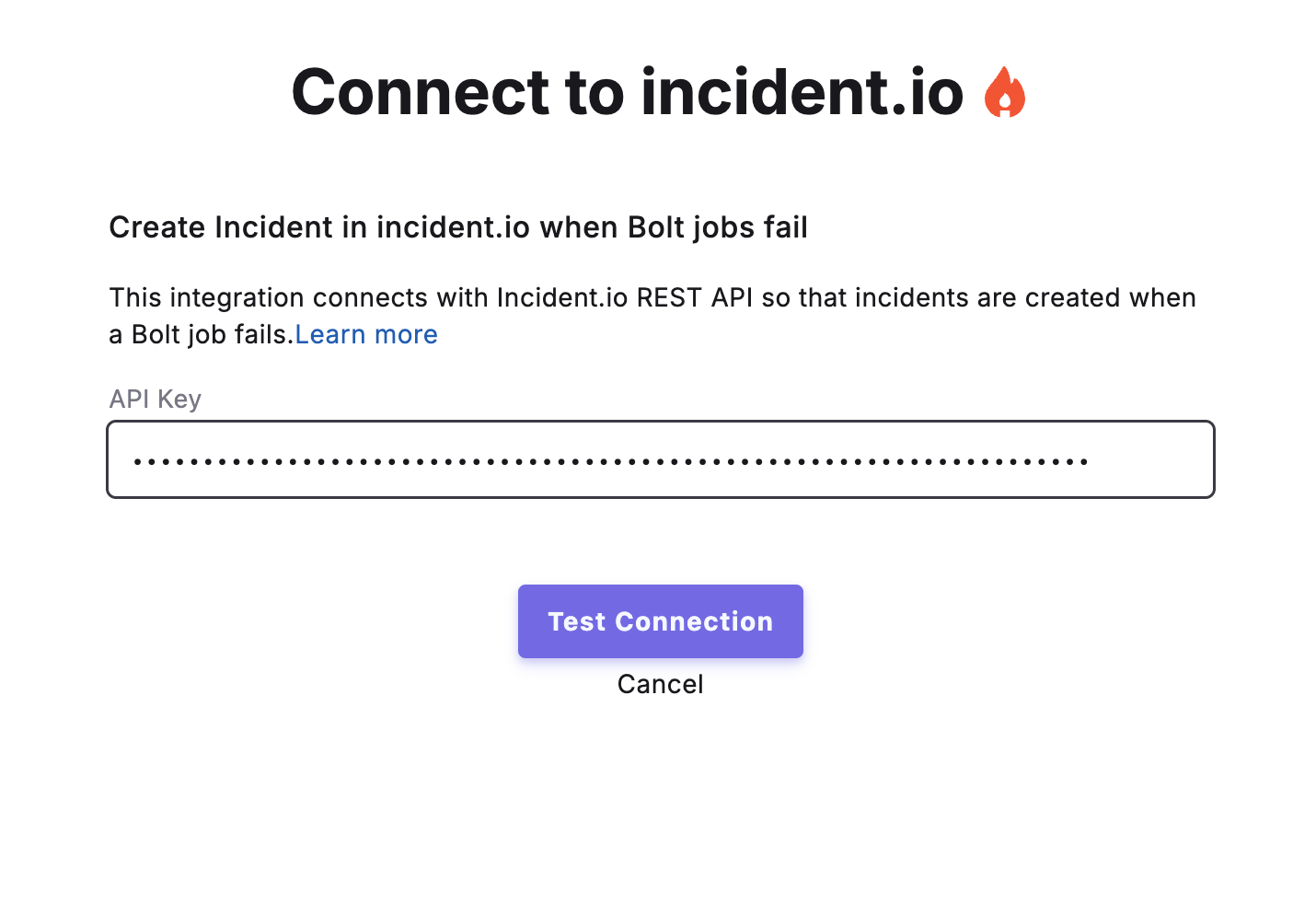
- In Paradime, navigate to Settings → Integrations → incident.io.
- Paste your incident.io API Key into the field provided.
- Click Create to establish the connection.
Enable incident.io for Your Bolt Schedules
After enabling the integration, you can configure which Bolt Schedules should create incidents in incident.io when they fail. To configure incident creation:- Navigate to Bolt > Schedules in the Paradime interface.
- Select the schedule you want to monitor.
- Open the Integration Settings for that schedule.
- Enable incident.io Incident Creation to automatically create incidents in incident.io when the schedule fails.
incident.io Integration Capabilities
Paradime uses the incident.io API to to automatically create incidents for for Bolt Schedules. This integration enables you to:- Automatically create incidents when dbt™ runs fail
- Leverage Slack-native incident management workflows
- Track MTTR and incident frequency for data pipelines
- Integrate pipeline failures with your on-call rotation
- Maintain centralized incident tracking across your organization
- Use incident.io’s timeline and postmortem features for pipeline issues